pragmatic slots
Pragmatic Slots: What the Brand Carries and What It Returns
The studio's titles sit in every major lobby; the model below prices a session and shows where the catalogue is hosted.
The shortlist, before the detail
The board below carries this month's featured offers with their headline terms. The prose that follows models offers of this kind and never repeats those figures; the operator's own page is always the binding version.
Roulette King picks
Top roulette offers this month
The shortlist first, then the arithmetic. Four featured packages carry the headline terms below; the rest of the page models what offers of this kind usually cost and what a licence would have added.
Terms checked at the October 2026 review · 18+ · T&Cs apply. Offers move often: the operator’s own page is always the binding version.
- 1
 Night Luck82/100Casino welcome bonus 805% up to €6,400 + 280 FS
- MuchBetter · VISA · Apple Pay
- Crypto welcome 140% up to 1,600 USDT
- VIP pack 800% up to €14,500
Visit siteNight Luck18+ · T&Cs apply - 2
 EliteSpin80/100Welcome bonus €/£5,000 + 500 FS
- MuchBetter · NETELLER · MasterCard
- Lootboxes up to €/£20,000 or 500 FS
- BGaming festival: €80,000 prize pool
Visit siteEliteSpin18+ · T&Cs apply - 3
 Winbeast78/100Welcome pack €5,000 + 500 FS + €650 free bet
- MasterCard · Litecoin · MuchBetter
- Code FORTUNE: wheel on €40+ deposits
- Monday boost: 40% up to €300 (BOOST1)
Visit siteWinbeast18+ · T&Cs apply - 4
 Betportal75/100Welcome package 300% up to €/£1,000 + 150 FS
- Trustly · Bitcoin · Bank transfer
- 1st deposit: 150% up to €/£500 + 100 FS
- 2nd deposit: 100% up to €/£300 + 50 FS
Visit siteBetportal18+ · T&Cs apply
Placements on this board are paid, and the order is part of that arrangement. Featured brands hold no UK Gambling Commission licence, so GamStop, independent dispute resolution and segregated-funds rules do not reach them. Gambling can be addictive. Play responsibly. How we are paid.
One catalogue, every lobby: what the studio is known for
Search pragmatic slots in almost any British lobby and the same shelf appears. The studio behind the range has spent well over a decade building a catalogue with a recognisable shape: quick base games, sharp volatility, a free-spins round that does most of the work and, increasingly, titles that let you buy straight into that round rather than wait for it. That combination has made the supplier one of the most widely hosted in the country, which is why the same names surface whether you open a games-led brand, a slots-first site or the casino tab of a large bookmaker.
Three features define the range and explain most of what follows. The first is volatility. Many of the headline titles pay unevenly, with long quiet stretches punctuated by features that carry the bulk of the return, so the fate of a session often rests on a handful of rounds. The second is the feature buy, a paid shortcut into the bonus round that gets a section of its own below. The third is the daily drop jackpot family, a set of timed pots fed by a small share of every qualifying stake across the network. Each of the three shapes what a session feels like and what it costs, which is why the model in the next section treats them separately.
It is worth being equally clear about what the catalogue is not. It is not a low-variance range built for long, slow evenings, and the published return to player figures, which usually sit in the mid-nineties, describe millions of spins rather than one sitting. Volatility is the property that matters most when choosing a stake, because it decides how bumpy the ride is and how quickly a bankroll can move in either direction. A smaller stake on a volatile title is the standard way to stretch a session without changing the underlying arithmetic.
The session model: stakes, spins and cost
Every figure in the table rests on stated assumptions, so the arithmetic can be checked rather than taken on trust. The model assumes a 4% blended edge across each session, a fair working figure for this catalogue once jackpot contributions are folded in; a 4% edge is another way of saying the games return 96% of turnover over the long run. Total staked is the per-spin stake multiplied by the number of spins, and the modelled cost is 4% of that total. Nothing about any individual session is promised by these numbers, because a single sitting can land a long way from its expectation in either direction. The surviving-bankroll column carries one further assumption: on a high-volatility paytable the middling outcome sits below the mathematical mean, so the model uses roughly 64% of turnover as a typical end point for a 500-spin session. That figure is illustrative rather than predictive, and materially better and worse runs are both common.
| Session model | Stakes | Spins | Model cost at 4% blended edge | Bankroll surviving 500 spins |
|---|---|---|---|---|
| Penny session | 10p | 500 | £50 staked | about £32 |
| Ten-penny play | 25p | 500 | £125 staked | about £80 |
| Mid stakes | £1 | 500 | £500 staked | about £320 |
| Feature-buy session | £2 plus a £40 buy | 200 | modelled on total outlay | capped by the buy outcome |
Read row by row, the arithmetic is plain. A penny session at 10p a spin stakes £50 across 500 spins; 4% of that is £2 of modelled cost, and a typical volatile run leaves about £32. The ten-penny row at 25p stakes £125, models a £5 cost and leaves about £80. Mid stakes at £1 a spin put £500 through the games, model a £20 cost and leave about £320 on the same assumptions. The feature-buy row works differently: 200 spins at £2 plus a single £40 buy comes to £440 of total outlay, the cost is modelled on that combined figure, roughly £17.60 at the blended edge, and the result is capped by whatever the bought feature pays. A buy moves the variance, not the edge, so the 4% still applies to the whole outlay. The pattern across the columns is the point: the edge is small and steady, while volatility, not the edge, decides the evening.
Stake choice, in other words, is the lever that scales cost. The edge percentage does not move between rows, so doubling the stake doubles both the modelled cost and the size of every swing, and sessions on pragmatic slots scale linearly with the dial, up and down alike. What the table cannot show is luck, which is why the assumptions are written out rather than hidden.
Where the catalogue sits: the comparison
Hosting is close to universal, so the meaningful differences between lobbies sit elsewhere: in licence, in market focus and in the protections that stand behind each brand. The table lines up the major UK hosts of the catalogue and finishes with one offshore-facing operator so the contrast is visible rather than theoretical. All but one hold a full UKGC licence, and the final column shows what that licence is worth in practice.
| Casino | Licence | Market focus | What it is known for | UK protections |
|---|---|---|---|---|
| Sky Vegas | UKGC | games-led brand | studio catalogue with frequent promos | Yes, full scheme |
| Virgin Games | UKGC | games-led brand | curated studio shelves | Yes, full scheme |
| MrQ | UKGC | no-wagering pioneer | spins on studio titles with nothing attached | Yes, full scheme |
| PlayOJO | UKGC | no-wagering model | kickers on studio games | Yes, full scheme |
| LeoVegas | UKGC | mobile-first casino | studio titles in the apps | Yes, full scheme |
| Unibet | UKGC | European bookmaker roots | studio catalogue beside the book | Yes, full scheme |
| Betway | UKGC | global bookmaker | studio shelves in the casino tab | Yes, full scheme |
| 888 Casino | UKGC | long-running standalone casino | studio titles beside exclusives | Yes, full scheme |
| Casumo | UKGC | licensed casino | gamified play on studio games | Yes, full scheme |
| Videoslots | UKGC | slots-first casino | studio catalogue at volume | Yes, full scheme |
| PartyCasino | UKGC | casino-first brand | studio titles with published terms | Yes, full scheme |
| Kinghills | No UKGC licence | offshore-facing casino | studio catalogue outside the UK scheme | None |
Sky Vegas and MrQ make the contrast easy to read. Both host the studio's games under a full UK licence with the complete protection scheme behind them, yet Sky Vegas wraps the catalogue in frequent promotional rotations while MrQ hands out spins on studio titles with nothing attached, so whatever a free spin wins stays as withdrawable cash. Reading the market focus column against the protections column is the quickest way to see which model of operator suits how you like to play.
Feature buys: the option that moves variance
A feature buy does what the name suggests. Instead of waiting for the free-spins round to trigger organically, you pay a fixed multiple of the base stake to jump straight into it. Pricing varies by title. The model row in the previous section assumes a buy costing 20 times a £2 base stake, which is the £40 used there, and that sits at the gentle end of a market where many buys are pitched between 50 and 100 times the base stake. On a £2 game, a 100-times buy would cost £200 for a single feature round, the price of a hundred ordinary spins.
The worked example follows the model row exactly. Set 200 spins at £2 and add one £40 buy, and the total outlay comes to £440. At the 4% blended edge the modelled cost of that session is about £17.60. What the buy changes is not the size of the cost but the shape of it. Rather than the feature arriving organically across a longer run, the whole return distribution is concentrated into one purchased round, which can pay nothing at all or many hundreds of pounds. The edge stays exactly where it was; the swings become far larger. Feature buys on pragmatic slots move variance, not the edge, and that distinction is the single most useful idea to carry away from this page.
Two cautions belong alongside the example. First, bought features consume bankroll quickly, because one purchase can cost as much as a hundred or more base spins, so a sequence of buys can exhaust a session budget before any feature has paid meaningfully. Second, a bought feature is drawn from the same distribution as an organic one, so paying for entry buys pace rather than advantage. Players who prefer steadier sessions can ignore the buy button entirely and let features arrive as they come, at no cost to the underlying return.
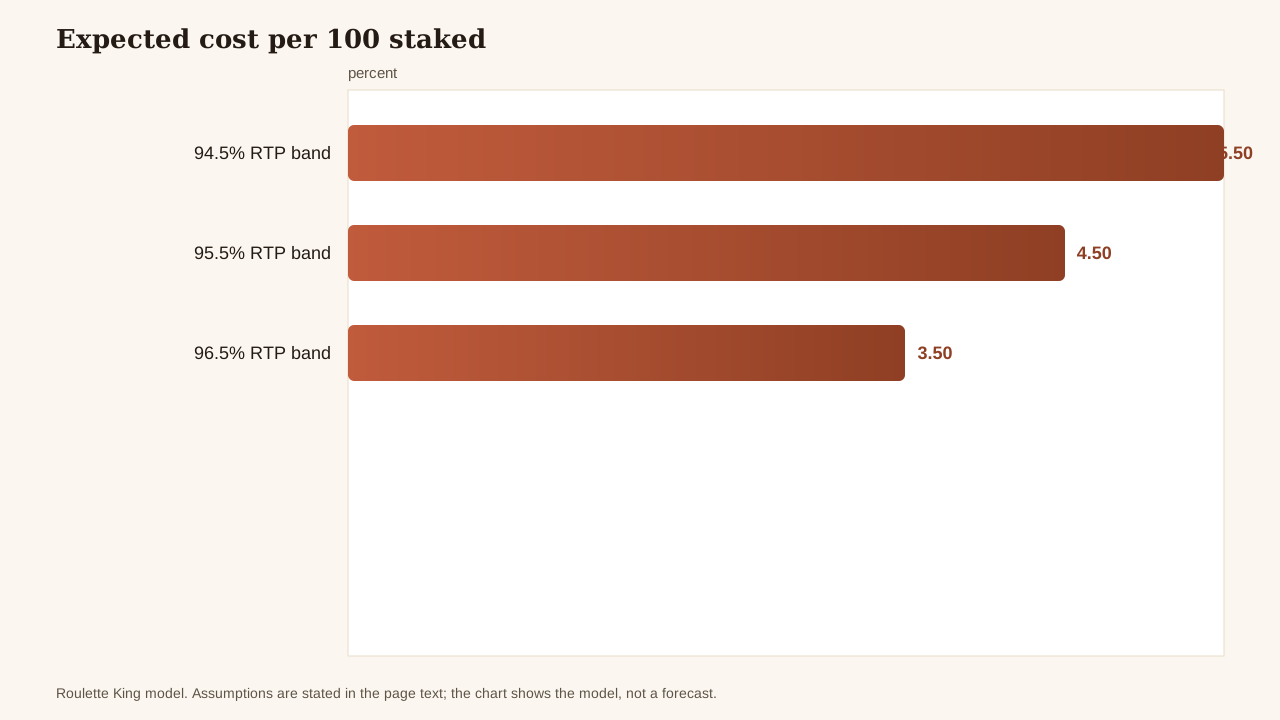
To price a stake and a session length of your own against the same assumptions, the calculator below carries out the arithmetic for you.
Session cost calculator
Modelled cost of a session from stake, length and the house edge you set.
Model illustration with stated inputs; the terms of a specific offer always override a model.
Daily drops: jackpots on a clock
Daily drop jackpots are timed pots attached to a wide slice of the catalogue. Each pool carries a deadline, hourly, daily or weekly, and the mechanics compel the pot to pay before that deadline expires, which is what the word drop means in this context. Because the countdown is public and the payout date is fixed, these jackpots behave differently from the older mystery progressives, where a pot can sit untouched for months on end.
The funding side is straightforward once you know where to look. A small percentage of every qualifying stake across the network is diverted into the pot pools, and that contribution sits alongside the game's published return to player rather than on top of it. This is one of the reasons the session model above uses a 4% blended edge rather than something lower: part of the theoretical return is being spent feeding pots that only a handful of players will collect. When a pot lands, the winner takes the whole timed amount, so over a very long horizon some of that contribution flows back to the player base. For any individual session, though, the contribution behaves like cost, and the model treats it exactly that way.
The practical takeaway is a modest one. Chasing a deadline does not improve the underlying edge, and the size of a pot says nothing about the chance of landing it, which is set by stake and random draw. The clock belongs to the network, not to the player, and no stake pattern changes when a pot falls or who is eligible to collect it. Treat the jackpots as a reason the catalogue costs what it costs, not as a strategy in themselves.
What a UK licence actually buys you
Licences are not decoration, and this is the one section of the page where the regulatory argument is made in full. A UKGC licence buys four concrete protections. The first is GamStop access: every GB-licensed operator must take part in the national self-exclusion scheme, so a single registration at gamstop.co.uk closes your accounts across the entire licensed market for the period you choose. The second is independent dispute resolution: if a complaint about a settled bet or a delayed withdrawal cannot be resolved with the operator, it can be escalated to an approved alternative dispute resolution body whose ruling the operator is bound to honour. The third is segregated funds: player money is held apart from operating money, so claims on balances survive even if an operator runs into serious difficulty. The fourth is a regulator who acts: the UKGC investigates complaints, fines operators and can revoke licences, which is what gives the other three protections their force.
Offers of this kind hosted without a UK licence carry none of that. There is no GamStop coverage, no independent escalation route, no requirement to segregate funds and no regulator with jurisdiction over British players. The comparison table includes one offshore-facing brand for precisely this reason: the same catalogue and the same studio shelf, attached to an entirely different standing if something goes wrong. The games do not change between licensed and offshore lobbies; everything around the games does.
If play ever stops feeling controlled, two resources are worth knowing before they are needed. GamStop, at gamstop.co.uk, handles self-exclusion across all licensed operators in one registration. The National Gambling Helpline, on 0808 8020 133, is run by GamCare with BeGambleAware and offers free, confidential support at any hour.
Frequently asked questions
What are feature buys?
A feature buy is a paid shortcut into a game's bonus round. You pay a set multiple of the base stake, often between 50 and 100 times, and the free-spins round starts immediately instead of triggering at random. The price of the buy does not change the underlying edge; it concentrates the session's variance into one purchased round, which is why bought features produce much larger swings than base play. Priced at the higher end, a single buy can cost what a hundred ordinary spins would, so budgeting for them matters.
What are daily drop jackpots?
Daily drops are timed jackpot pools attached to a wide range of the studio's titles. Each pot carries an hourly, daily or weekly deadline and must pay out before it expires, which distinguishes them from progressives that can idle for months. The pots are funded by a small percentage of qualifying stakes taken across the network, and that contribution forms part of the 4% blended edge modelled in the session section above.
How volatile is the catalogue?
Mostly high. The headline titles are built around uneven paytables, where long quiet spells are punctuated by features carrying most of the return. Sessions on pragmatic slots can move a bankroll sharply in either direction, and the surviving-bankroll column in the model reflects a typical middling outcome rather than the mathematical average, which sits higher. Anyone who prefers gentle sessions should treat the volatility warning as the headline rather than the footnote.
What does a session cost?
On the model's assumptions, the cost is a 4% blended edge applied to total staked: £2 for 500 spins at 10p, £5 at 25p and £20 at £1, with the feature-buy row modelled on £440 of total outlay. Nothing is promised for any single session, and volatile runs can land well clear of those figures in both directions, but the arithmetic gives a fair expected price for the entertainment before luck is applied.
Where are the titles hosted?
Practically everywhere. Every licensed lobby in the comparison table carries the catalogue, from games-led brands such as Sky Vegas and Virgin Games to the casino tabs of large bookmakers such as Unibet and Betway, and slots-first sites such as Videoslots host it at volume. One offshore-facing operator also hosts the same shelf, but without any of the UK protections, which is the point of showing it.
Do spins promotions cover the catalogue?
Often, though the terms decide everything. MrQ attaches nothing to spins on studio titles, PlayOJO returns kickers alongside them, and Sky Vegas rotates frequent promos around the shelf. Wherever a spins offer of this kind touches the catalogue, check whether winnings carry wagering requirements, how long they last and which titles qualify, because each of those details varies between operators and some exclude the newest or most volatile releases.
What does the licence gap mean?
An operator without a UKGC licence cannot offer GamStop registration, independent dispute resolution, segregated player funds or a regulator who acts on complaints. The catalogue may look identical in an offshore lobby, yet none of the protections behind it apply there, which is why the comparison keeps the two sides visible at once. The licensed side of the market carries the full scheme, and the National Gambling Helpline on 0808 8020 133 remains available to anyone who needs it regardless of where they play.