mobile casinos
Mobile casinos
Most UK play now happens on a phone; the model below prices the sessions that fit a day.
The shortlist, before the detail
The board below carries this month's featured offers with their headline terms. The prose that follows models offers of this kind and never repeats those figures; the operator's own page is always the binding version.
Roulette King picks
Top roulette offers this month
The shortlist first, then the arithmetic. Four featured packages carry the headline terms below; the rest of the page models what offers of this kind usually cost and what a licence would have added.
Terms checked at the October 2026 review · 18+ · T&Cs apply. Offers move often: the operator’s own page is always the binding version.
- 1
 Night Luck82/100Casino welcome bonus 805% up to €6,400 + 280 FS
- MuchBetter · VISA · Apple Pay
- Crypto welcome 140% up to 1,600 USDT
- VIP pack 800% up to €14,500
Visit siteNight Luck18+ · T&Cs apply - 2
 EliteSpin80/100Welcome bonus €/£5,000 + 500 FS
- MuchBetter · NETELLER · MasterCard
- Lootboxes up to €/£20,000 or 500 FS
- BGaming festival: €80,000 prize pool
Visit siteEliteSpin18+ · T&Cs apply - 3
 Winbeast78/100Welcome pack €5,000 + 500 FS + €650 free bet
- MasterCard · Litecoin · MuchBetter
- Code FORTUNE: wheel on €40+ deposits
- Monday boost: 40% up to €300 (BOOST1)
Visit siteWinbeast18+ · T&Cs apply - 4
 Betportal75/100Welcome package 300% up to €/£1,000 + 150 FS
- Trustly · Bitcoin · Bank transfer
- 1st deposit: 150% up to €/£500 + 100 FS
- 2nd deposit: 100% up to €/£300 + 50 FS
Visit siteBetportal18+ · T&Cs apply
Placements on this board are paid, and the order is part of that arrangement. Featured brands hold no UK Gambling Commission licence, so GamStop, independent dispute resolution and segregated-funds rules do not reach them. Gambling can be addictive. Play responsibly. How we are paid.
What apps change: speed, session length, stake creep and visibility
Speed comes first, because it reshapes everything else. A round on a phone takes seconds, with no start-up routine, no trip to a shop and no wait for a computer to wake. Mobile play has compressed the distance between a passing thought and a live bet until almost nothing of it remains: a deposit takes two taps behind a fingerprint, and the next round loads before the kettle boils. That convenience is a genuine achievement of design, and it is also the reason the cost model below matters, because when friction disappears, the brake that used to slow impulsive play goes with it.
Session length behaves differently too. Play at a desktop used to arrive in blocks: an evening, a defined window, a chair. On a phone the same total splits into fragments, a few minutes on the commute, a few more in a queue, a handful of rounds during the adverts. Shorter sessions sound harmless, and each one is small, but the cost arithmetic responds to the number of rounds staked rather than the container those rounds arrive in. Twenty sessions of fifty rounds cost the same as one session of a thousand, and the fragmented pattern is far easier to underestimate because no single sitting feels like an event worth examining.
Stake creep follows from pace. Small screens make small numbers look smaller still: a 20p stake reads as pocket change, and quick-rebet controls let it drift to 40p, then £1, without ever feeling like a decision. Interfaces are tuned for momentum, with bet buttons placed exactly where a thumb rests, and momentum is what turns a planned few pounds into a larger spend. Nothing in that design is improper, it is simply built to keep rounds flowing, which means a player who wants control has to supply the pauses the interface does not.
Visibility is the counterweight, and it is stronger on a phone than it ever was in a bookmaker's shop. A balance sits on screen throughout, updated after every round. UK rules require reality checks that surface time played, and licensed apps must keep account tools reachable rather than buried. A phone also leaves a trail a shop floor never could: every deposit sits in a statement, and banking apps increasingly flag gambling spend in a category of its own. Used deliberately, the small screen gives back in transparency much of what it takes in speed, though that setup rarely happens by accident, which is why the controls section walks through it in full.
How the main mobile casinos compare
Every casino in this comparison holds a licence from the UK Gambling Commission, so the same floor of protections runs beneath the whole table, and the columns that actually separate the field are market focus and what each name has built its reputation on.
| Casino | Licence | Market focus | What it is known for | UK protections |
|---|---|---|---|---|
| LeoVegas | UKGC licensed | mobile-first casino | apps as the product | Yes, full scheme |
| Bet365 | UKGC licensed | sportsbook-first giant | one app, book and casino | Yes, full scheme |
| Midnite | UKGC licensed | UK-led brand | app-led onboarding | Yes, full scheme |
| MrQ | UKGC licensed | no-wagering pioneer | light mobile lobby | Yes, full scheme |
| Pub Casino | UKGC licensed | UK brand | simple mobile site | Yes, full scheme |
| Duelz | UKGC licensed | UK-licensed brand | duel-format play on phones | Yes, full scheme |
| William Hill | UKGC licensed | high-street heritage | casino app beside the book | Yes, full scheme |
| Coral | UKGC licensed | mainstream brand | app-first cashier | Yes, full scheme |
| Ladbrokes | UKGC licensed | high-street brand | casino tab in the main app | Yes, full scheme |
| Sun Bingo | UKGC licensed | tabloid-partnered bingo | small-stake mobile play | Yes, full scheme |
| Magic Red | UKGC licensed | licensed casino | compact mobile lobby | Yes, full scheme |
| 32Red | UKGC licensed | long-standing casino brand | mobile app with steady terms | Yes, full scheme |
LeoVegas and Bet365 mark the two poles of this part of the market. LeoVegas treats the app as the product itself, a casino designed thumb-first, while Bet365 is a sportsbook-first giant that folds the casino into one app beside the book. Between those poles, the specialists and high-street names differ mainly in how light the lobby feels, where the cashier sits and how much of the experience was built for phones rather than carried across from desktop.
Reading the market focus column is the quickest way to shortlist. Players who want everything under one login tend toward the sportsbook giants; players who want a lobby stripped to essentials tend toward the lighter brands; and anyone who values a particular format, such as no-wagering offers or duel-style play, can filter on that alone. Protections do not need weighing here, because the licence column shows they are constant, which leaves the choosing to taste and habit rather than paperwork.
What a session costs: the model
Numbers beat adjectives, so this section prices four sessions that fit a British day. The assumptions are stated in full. Every round is staked flat, meaning the stake never changes mid-session. The round counts are fixed and listed in the table. A house edge of 4% is applied to every pound staked, a realistic middle for mobile casinos where online slots commonly return between 94% and 96%, though some table games sit lower and individual titles vary. No bonuses, cashback or loyalty offsets are netted off, and nothing about single-session outcomes is predicted, because the edge is a long-run average and any individual session can finish well ahead of it or well behind.
| Session | Stakes | Rounds | Model cost at 4% edge |
|---|---|---|---|
| Commute | 20p a round, £20 staked | 100 | about £0.80 |
| Lunch break | 50p a round, £50 staked | 100 | about £2 |
| Evening | £1 a round, £200 staked | 200 | about £8 |
| Long weekend session | £2 a round, £1,000 staked | 500 | about £40 |
Read across a month, the spread becomes clearer. A commute habit, taken as twenty journeys a month at roughly 80p of model cost each, prices at about £16. An evening pattern of four sessions a week, sixteen a month at about £8, prices at about £128. The long weekend session, run twice a month at about £40, adds about £80. The same arithmetic that makes the commute look trivial makes the heavy pattern expensive, and total rounds do the work rather than stake size alone: the weekend session stakes fifty times what the commute stakes, so it costs fifty times as much in model terms, even though its per-round stake is only ten times larger.
Variance deserves a warning of its own, because the model can be misread in both directions. A single evening can return several hundred pounds, and a single commute can swallow the whole monthly budget, without the 4% figure being wrong. The edge expresses what the games keep over thousands of rounds, and the smaller the round count, the more the outcome is decided by chance rather than arithmetic. Anyone who starts tracking sessions against the model and feeling ahead is using it backwards; it prices the habit, not the next hour.
To price a session of your own, the calculator applies the same 4% assumption to whatever stake and round count you enter, and it works best when the result is multiplied by an honest guess at weekly frequency.
Session cost calculator
Modelled cost of a session from stake, length and the house edge you set.
Model illustration with stated inputs; the terms of a specific offer always override a model.
Mobile cashier flows: paying in and getting paid
The cashier is where phones differ most from the desktop era, because the device brought its own payment rails. Apple Pay leads on speed: the card sits behind the device, Face ID or a fingerprint confirms the deposit, and funds land without a number being typed. Google Pay does the equivalent job on Android with the same biometric gate. Both keep card details out of each operator's systems, which is a quiet security gain, and both complete in seconds, which is a speed gain with all that implies for the pace of a session.
Phone billing takes a different route entirely, charging deposits to pay-as-you-go credit or to the monthly mobile bill. It suits small-stake players because the networks impose caps, commonly around £30 a day depending on provider, and because the charges appear on a bill that is read anyway. Two structural limits matter: the rail is deposit-only, so withdrawals never travel back through it, and the caps vary by network, so they should be checked rather than assumed.
Withdrawals still travel the older roads. Debit cards and bank transfer carry nearly all payouts, and processing times range from hours to a few working days depending on the operator and the checks triggered. One routing rule causes regular confusion: anti-money-laundering practice usually requires payouts to return to the source of funds, so a player who deposits through a phone-billing rail should expect a withdrawal to be directed to a verified bank account instead. Credit cards, worth restating, are banned for gambling with UK-licensed operators, a rule that has applied since 2020 and covers every device.
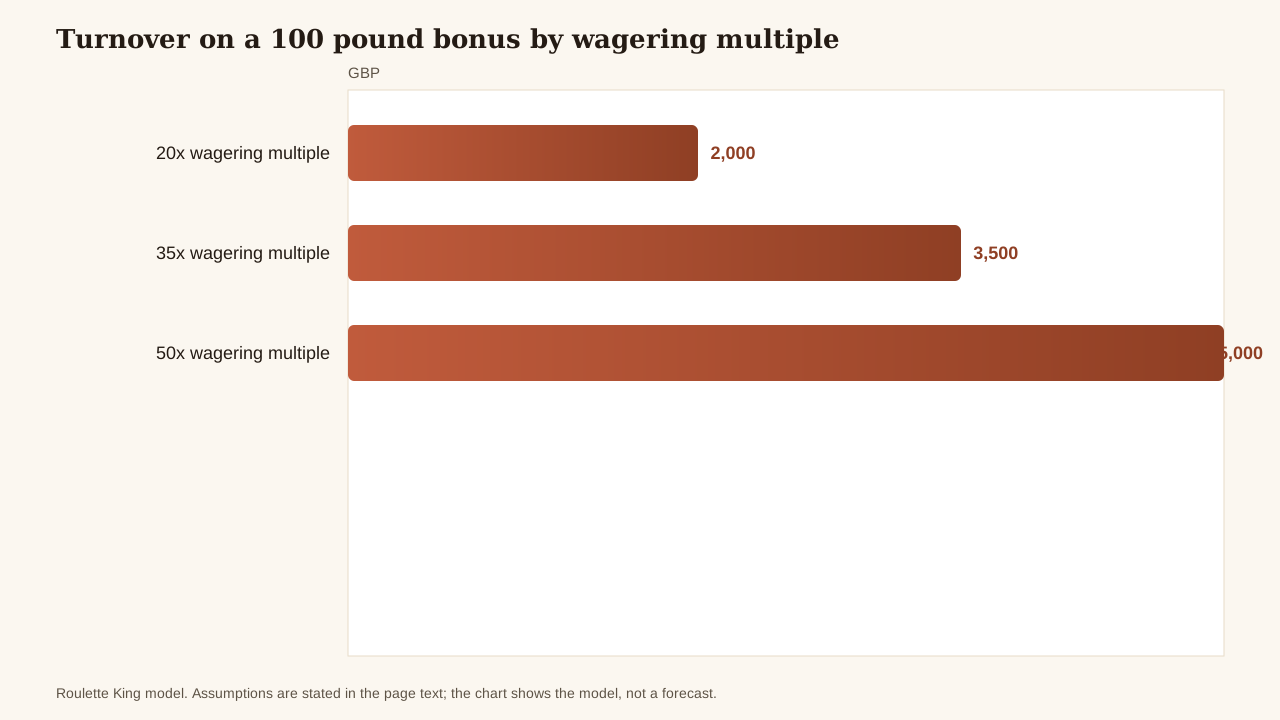
The figure condenses the session model into one view, and it earns a place beside the cashier discussion because stake and payment method travel together in practice. A capped phone-billing rail naturally produces small, frequent sessions, while a card-funded account makes the long weekend session easy to fund at a tap. Matching the rail to the intended session shape is one of the unglamorous disciplines of keeping costs where they were planned.
Mobile protections: reality checks, limits and time-outs
Reality checks come first, and UK-licensed apps surface them on screen at an interval the player chooses. A check interrupts play with the time elapsed and the running position, and clearing it takes a deliberate action rather than a reflex. On a device built for flow, an enforced pause is worth more than it looks, because the fragmentary sessions described earlier are precisely the ones a player loses track of.
Limits follow, and the deposit limit is the workhorse. It can be set for a day, a week or a month; a decrease takes effect immediately, while an increase waits out a cooling-off period, commonly a day, so a raise can never be decided and actioned inside the same session. Many operators add loss limits, and some apps allow a cap per round, which speaks directly to the stake-creep problem described at the top of the page.
Time-outs scale with the situation. A cool-off can be set for a single evening, a weekend or several weeks, during which the account stays shut to deposits and play however the app is opened or reinstalled. Beyond that sits full self-exclusion, which runs through GamStop across every UK-licensed operator at once and is covered in the licence section below. The strongest mobile habit combines these account tools with device tools: push notifications switched off, so the app never knocks first; screen-time limits, so the phone itself counts the hours; and the gambling blocks most UK banking apps now offer, which stop deposits at the source.
None of these tools changes the odds, and none is a promise of cheap play. What they change is the gap between an impulse and a bet, and on a phone that gap is nearly the whole game. A player who sets limits in the first week, silences notifications and leaves reality checks switched on has rebuilt the friction the interface quietly removed.
What a UK licence actually buys
Licences sound like paperwork until something goes wrong, at which point they are the difference between a process and a dead end. Four protections carry most of the weight. First, GamStop access: every UK-licensed operator is connected to the national self-exclusion scheme at gamstop.co.uk, so one registration excludes a player across all of them simultaneously, for a minimum of six months. Second, independent dispute resolution: if a complaint about a withheld withdrawal or a contested term stalls with the operator, it can be escalated free of charge to a dispute body approved by the Commission, and the operator is bound by the outcome.
Third, segregated funds: player balances must be held apart from the company's operating money, so deposits are not simply working capital, and protections apply if an operator gets into difficulty. Fourth, and underpinning the rest, a regulator who acts: the Commission fines, suspends and revokes licences, and it publishes what it does, which is why the licence column in a comparison deserves a look even when every entry reads the same. A revoked operator stops trading; a fined one pays in public.
Offers from sites without a UK licence carry none of this. There is no GamStop connection, so self-exclusion stops at each site's border. There is no independent dispute route, so a complaint ends wherever the operator decides. There is no segregation requirement, no regulator reading the small print, and no practical comeback when a withdrawal stalls. Whatever such sites advertise, the protections are the product, and on the unlicensed side of the market they are absent.
For anyone who feels play is becoming a problem, the National Gambling Helpline is free and open every day on 0808 8020 133, run by GamCare working with BeGambleAware. It is confidential, it is staffed by trained advisers, and it exists for exactly the moments when the account tools described earlier feel too small for the job.
Frequently asked questions
Which mobile casino apps lead the UK market?
The leaders differ by intent rather than by a single ranking. LeoVegas remains the clearest mobile-first casino, designed as an app product from the ground up, while Bet365 suits players who want the casino beside the book under one login. MrQ appeals on simplicity and its no-wagering approach to offers, William Hill, Coral and Ladbrokes carry high-street familiarity into competent apps, and Midnite represents the newer UK-led wave with app-led onboarding. What separates the field is shape: a casino built for the phone, a sportsbook that carries a casino, and lighter lobbies built around small stakes. Mobile casinos reward choosing by shape over choosing by banner.
What does a typical session cost?
Under the assumptions set out earlier, with flat stakes, the listed round counts and a 4% edge on everything staked, a commute session of 100 rounds at 20p prices at about 80p, a lunch break of 100 rounds at 50p at about £2, an evening of 200 rounds at £1 at about £8, and a long weekend session of 500 rounds at £2 at about £40. Those figures are long-run averages, not predictions, and single sessions swing far wider in both directions. The honest use of the numbers is as a budgeting tool, because across a month it is the habit rather than any one session that decides the bill.
How do limits work on mobile?
Deposit limits are set in the account area for a day, a week or a month. Lowering a limit takes effect immediately, while raising one waits out a cooling-off period before it applies, so a raise is never a decision taken and completed mid-session. Reality checks appear at the interval chosen and show time played, which keeps fragmented sessions visible. Cool-offs close the account from a single evening up to several weeks, and self-exclusion through GamStop runs across all UK-licensed operators for at least six months. Device-level settings, including silenced notifications, screen-time controls and gambling blocks in banking apps, extend the same idea to the phone itself.
Which payment methods suit phones?
Apple Pay and Google Pay suit deposits well, pairing biometric confirmation with cards kept off the operator's records. Pay-by-mobile rails, which charge a phone bill or pay-as-you-go credit, suit small stakes and carry network caps, often around £30 a day, though they are deposit-only. Debit cards and bank transfer handle withdrawals, and payouts generally return to the source of funds under anti-money-laundering practice. Credit cards are banned for gambling with UK-licensed operators. A sensible pairing is a biometric wallet for deposits and a debit card verified for withdrawals, with the phone-billing cap doing steady budgeting work for anyone who prefers it.
App or browser: which should a player use?
Each has a case. Apps load faster, log in with a fingerprint or face and remember preferences, which makes sessions smoother; the same speed cuts the other way when notifications invite a player back, so silencing them is sensible. Browsers need no storage and no updates, work on any device and keep a little distance between a passing thought and a bet. The games themselves are identical on both, drawn from the same certified libraries with the same return-to-player figures, so nothing is gained or lost mathematically. The choice is about friction: an app removes it, a browser preserves some of it, and the right answer depends on how much of that trade a player wants.
Do apps change the odds?
No. The odds live in the game rather than the screen: a slot's random number generator and its stated return to player are the same in an app, in a browser and on a desktop, and licensed testing checks that the versions match. What an app changes is convenience, pace and how easy it is to start another round, which is where the cost differences in the session model come from. Anyone who suggests an app version of a game pays differently is describing a different game rather than a different device, and the game's own information pages will show the return to player either way.
What does the licence gap mean in practice?
It means the protections go missing exactly where they matter. A site without UK licensing offers no GamStop access, so self-exclusion does not follow the player; no independent dispute resolution, so a stalled withdrawal has nowhere to go; no requirement to segregate player funds; and no regulator able to fine, suspend or close it down. Terms can change without published consequence, and any offer displayed sits outside the protections described on this page. For that reason the comparisons here stay within the licensed market, and anyone worried about their play, on mobile casinos or anywhere else, can call the National Gambling Helpline free on 0808 8020 133, run by GamCare with BeGambleAware.